
Gold-Plated vs. Gold-Filled vs. Solid Gold: What’s the Difference?
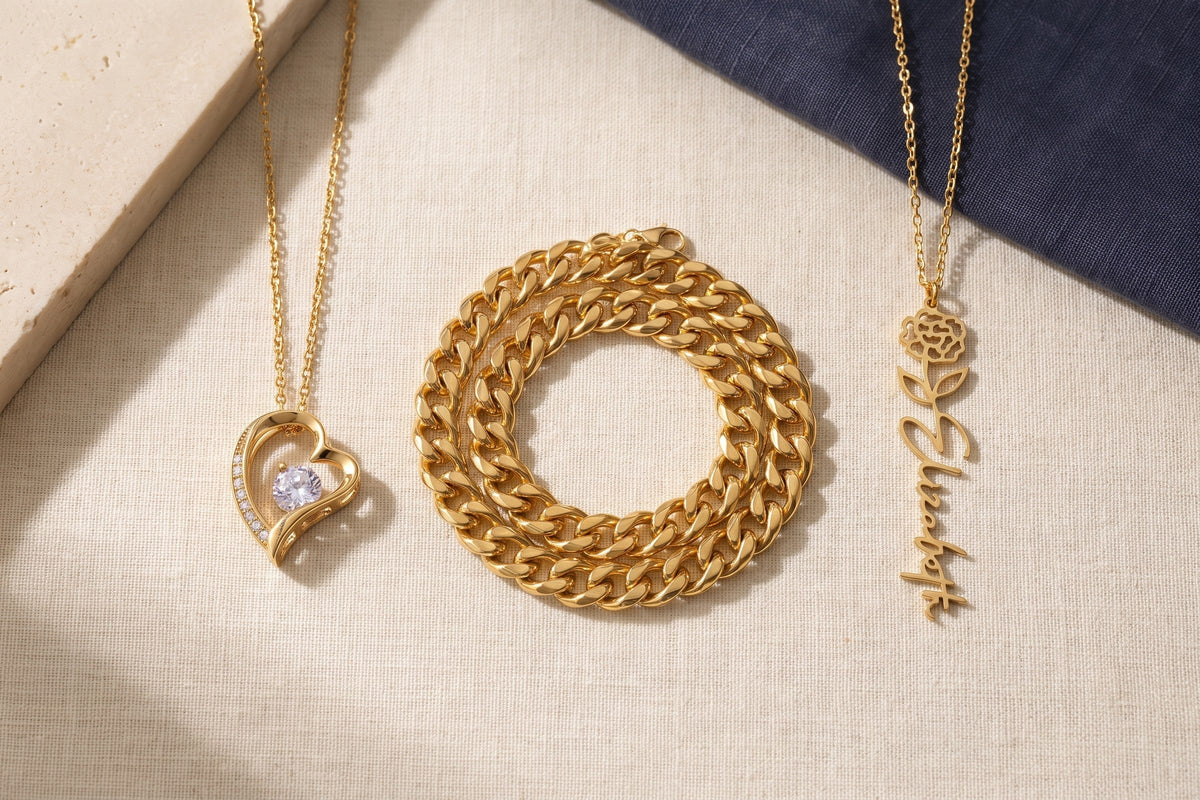
Gold jewelry can look similar at first glance while being made in different ways. Gold-plated, gold-filled and solid gold are not interchangeable labels: they refer to different constructions and, in some cases, specific marking standards.
What is gold-plated jewelry?
Gold-plated jewelry has gold applied to the surface of another metal. The base metal provides the structure while the outer layer creates the gold color and finish. Plating thickness and application methods vary, and the surface can gradually change with friction, chemicals and repeated wear.
Gold plating can offer the look of gold at a more accessible price point. The right choice depends on the specific piece and how it will be worn.
What is gold-filled jewelry?
Gold-filled jewelry is not simply another name for ordinary gold plating. In U.S. consumer guidance, the term describes a layer of gold that is at least 10 karats mechanically applied over a base metal. Markings can also indicate the relationship between the gold alloy layer and the item’s total metal weight.
Because the construction differs from conventional electroplating, compare the exact marking and product details rather than assuming all gold-colored finishes are equivalent.
What does solid gold mean?
In U.S. jewelry terminology, “solid gold” means the item is not hollow. A karat mark such as 14K or 18K indicates the proportion of gold in the alloy. Unlike a gold-plated piece, its gold content is part of the item’s metal rather than only an applied surface layer.
Pure 24-karat gold is very soft, so jewelry is commonly made from lower-karat gold alloys that combine gold with other metals.
How should you choose?
Think about how often the piece will be worn, your budget, its construction and how you want it to age. A keepsake worn occasionally may have different needs from an everyday chain or ring.
Care matters for every finish
Even durable jewelry benefits from thoughtful care. Remove jewelry before swimming, showering or applying lotions and fragrances when possible. Store pieces dry and separately to reduce scratching, and use a soft cloth rather than abrasive cleaners unless the maker recommends otherwise.
For Everword pieces, always follow the material and care information listed on the individual product page because construction can vary by design.
Read our guide to gold plating or browse meaningful keepsakes.


