
How to Choose a Meaningful Personalized Gift for Someone You Love
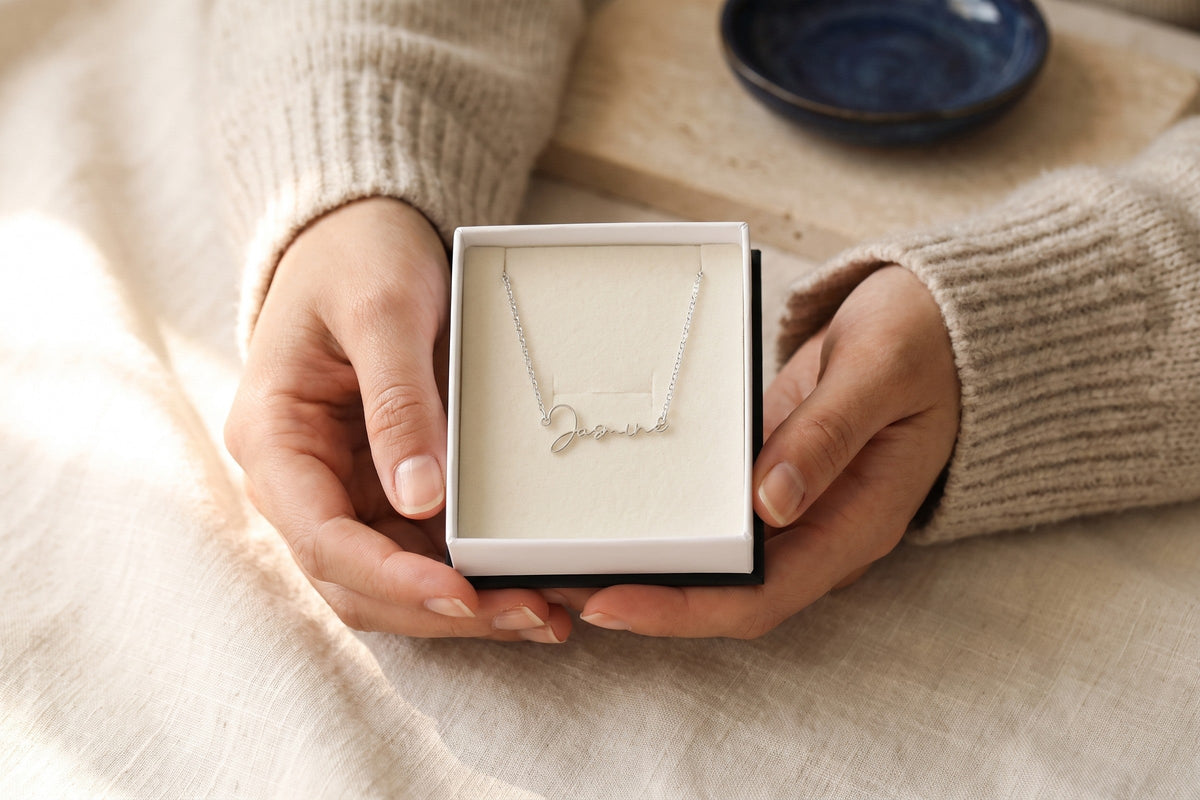
A meaningful gift does not need the longest message, the biggest gesture or the most complicated personalization. Usually, it feels meaningful because it is specific: it reflects a person, a memory, a place, a milestone or a small detail that belongs to the two of you.
That is the useful way to think about personalized gifts. Instead of starting with What should I buy?, start with What do I want this person to remember when they see it?
This guide walks through that decision in a simple way, whether you are shopping for a partner, your mom, a daughter, a sister, a friend or someone else you want to keep close.
1. Start with the person, not the product
Before choosing a necklace, ring, keepsake or gift set, think about the recipient's everyday life. The best gift is not simply the one with the most personalization options. It is the one that feels natural for them to own, wear or keep.
Ask a few basic questions:
- What do they already wear or use often?
- Are they sentimental in an obvious way, or do they prefer quieter reminders?
- Would they value a name, a private message, a photo, a place or a symbol more?
- Is the gift celebrating who they are, your relationship, or a particular chapter of life?
If you are shopping by relationship, Everword's recipient collections can help narrow the starting point: gifts for a partner, gifts for Mom, gifts for a daughter, gifts for a sister, gifts for a friend, and gifts for him.
2. Decide what the personalization should preserve
Personalization works best when it gives the gift a clear reason to exist. One useful way to choose is to decide what you want the piece to hold onto.
A name or word
A name can represent the recipient, a child, a partner, a family member or someone whose presence matters every day. It is simple, immediately recognizable and works especially well when you want the meaning to be personal without requiring a long explanation. Explore personalized name necklaces for this kind of gift.
A message
An engraved message can carry a phrase, initials or a private reminder. The strongest messages are usually the ones that sound like something you would actually say to that person. A few honest words tend to feel more personal than a paragraph of generic sentiment. You can browse engraved gifts and engraved rings for ideas.
A place
A map can turn a location into a reminder: where you met, where you married, where home is, where a family began or where a favorite memory happened. Place-based personalization is especially useful when the meaning is difficult to summarize in words.
A photo
A photo can make the gift about a real moment rather than a general occasion. Choose an image that has emotional clarity even if it is not technically perfect: a familiar face, a pet, a family moment or a photograph that immediately brings back a story.
A birthstone or birth flower
Birthstones and birth flowers can add meaning without requiring a message. They can represent one person or help connect a name to a month, birthday or family story. See birthstone jewelry and birth flower jewelry.
3. Match the level of personalization to the relationship
Not every relationship calls for the same degree of intimacy. A romantic partner may appreciate something that references a private place or phrase. A friend may prefer a name, symbol or understated reminder. A graduation gift may work best when it centers the recipient rather than the giver.
A helpful rule is this: the closer the personalization is to a shared memory, the more intimate the gift will feel. If you are unsure, choose something that celebrates the recipient rather than requiring them to understand a complicated message.
4. Let the life chapter guide the gift
Occasions matter because they tell you what the gift is trying to say. A birthday says, I know you. An anniversary says, I remember us. A wedding says, This moment matters. A graduation says, Look how far you have come. A just-because gift says, I was thinking of you before the calendar told me to.
For milestone shopping, browse birthday gifts, anniversary gifts, wedding gifts, graduation gifts or Christmas gifts.
The occasion can guide the message, but it does not need to dominate the personalization. A graduation piece can still be about a person's name. An anniversary gift can be about a place. A birthday gift can preserve a photo or family connection. The most memorable choice often connects the chapter to something more personal than the date itself.
5. Choose a form they will actually enjoy
Meaning matters, but so does fit. A beautiful personalized object is more likely to become part of someone's life when it suits their habits and style.
If they wear jewelry regularly, think about the forms they already choose: necklaces, rings, earrings or bracelets. If they prefer a complete presentation, a gift set can make the moment feel more finished. If you are shopping more broadly, keepsakes can help you look beyond one product type.
Do not choose a product solely because it allows more text. Choose the form first, then use personalization to make that form theirs.
6. Keep the wording specific and natural
Personalized gifts can become less personal when the message sounds like it could belong to anyone. You do not need to write like a greeting card company. You need to sound like yourself.
Instead of searching for the most dramatic phrase, think about language that already exists in your relationship: a nickname, a familiar sign-off, a phrase you repeat, initials, a date that needs no explanation or a short sentence the recipient would recognize as yours.
Before ordering, read the personalization out loud. If it sounds natural in your voice and specific to the recipient, it is probably doing its job.
7. Think about presentation after you have chosen the meaning
Presentation helps create the gifting moment, but it should support the meaning rather than replace it. A thoughtful box, wrap or note can make an already personal gift feel ready to give.
If you include a note, it does not need to repeat the personalization. Use the note to explain why you chose it. A simple sentence such as “I wanted you to have a little reminder of this place” can add context without over-explaining the gift.
Quick ideas by recipient
For a partner
Think shared history: a meaningful location, an anniversary, names, a private message or a piece that represents your relationship without needing to announce it. Start with gifts for a partner.
For Mom
Names, family connections, birthstones, birth flowers and messages tied to family can all work well. The strongest choice is the one that reflects how she sees herself and the people she keeps close. Browse gifts for Mom.
For a daughter
A personalized piece can mark both who she is now and the chapter she is entering. Names and short messages work especially well when you want the gift to feel like encouragement she can carry with her. Browse gifts for a daughter.
For a sister or friend
You do not need a formal occasion. A name, a small shared reference or a reminder of a particular season of friendship can make the gift feel personal without becoming overly serious. See gifts for a sister or gifts for a friend.
For him
Keep the personalization direct. A name, short engraving or meaningful date can add significance while keeping the overall gift straightforward. Explore gifts for him.
For a graduate
Graduation gifts work best when they look forward as well as back. A name, milestone or concise message can recognize what they have accomplished without making the gift feel tied to only one day. See graduation gifts.
A five-question check before you choose
- Who is this really about? The recipient should be at the center of the choice.
- What should it remind them of? A person, place, memory, milestone or tradition gives the personalization direction.
- Will they actually wear, use or keep this form? Meaning and usefulness can coexist.
- Does the personalization sound like us? Specific and natural usually beats elaborate.
- Would the gift still make sense after the occasion has passed? The best keepsakes can outlast the day they were given.
Choose something worth keeping
There is no single formula for a meaningful personalized gift. The point is not to put more information on an object. It is to choose the right detail—the name, place, image, message or symbol that makes the gift belong to one person and one story.
That is what turns a gift into a keepsake: something tied to the people and chapters you want to keep close.
Shop all meaningful gifts or begin with the person or moment you are celebrating.


